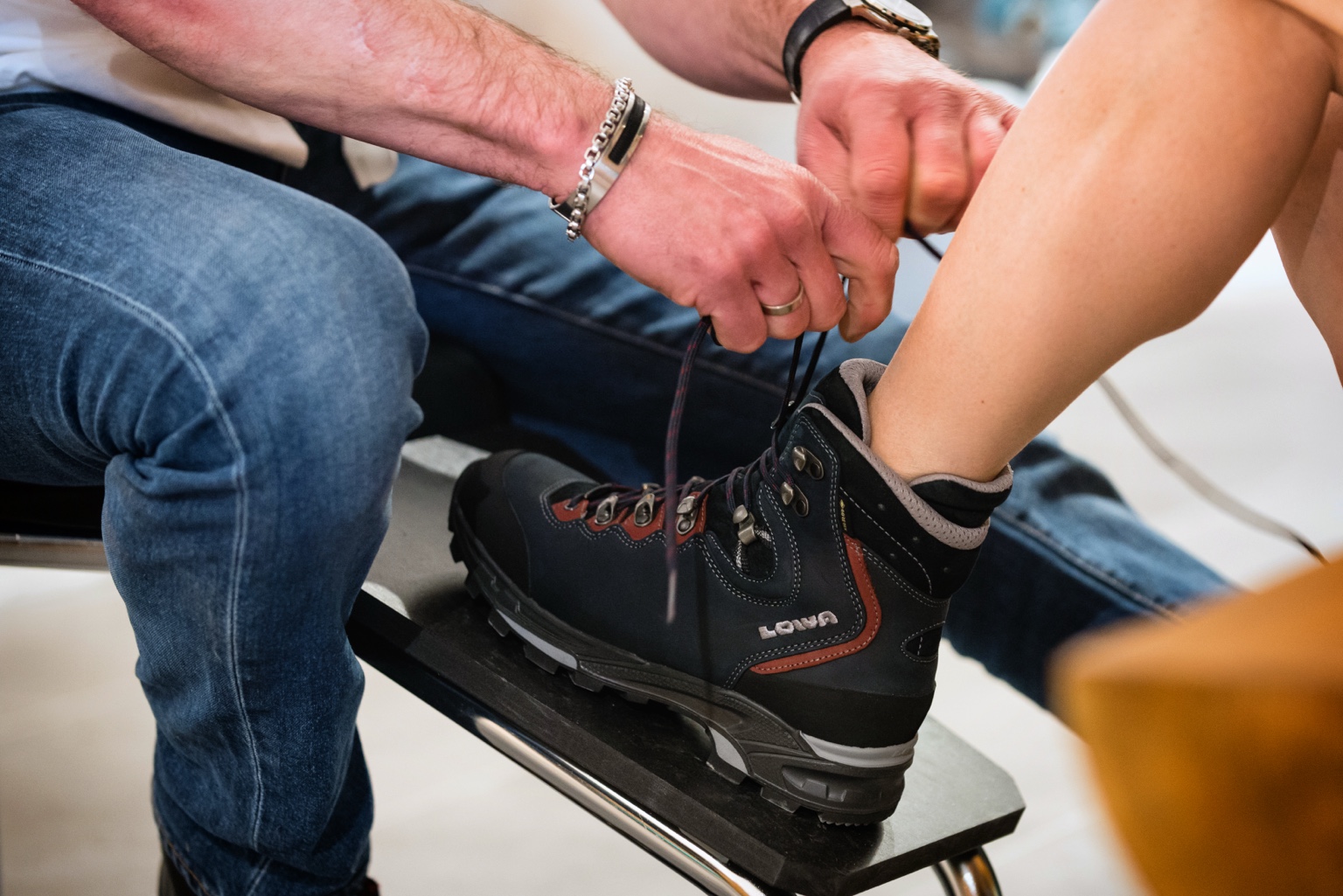
How does the shoe feel around your foot: flexible, firm or too tight somewhere? The material, thickness and reinforcements all play a part. We let you compare different versions.
Leather
Leather can provide a robust, abrasion-resistant upper. There are flexible and firmer versions. How much the shoe gives also depends on its construction.
We discuss how it feels to wear and how to care for this particular leather. That way, you also know what maintenance to expect after your walks.
Fabric and synthetic materials
These materials can make a shoe light and flexible, and often dry faster than leather. You will also find combinations with leather panels.
We compare the weight and how the shoe feels around your foot. The lining, reinforcements and sole all play a part.
What are nubuck and suede?+
They are types of leather with different surfaces. Nubuck is finely buffed on the outer side. Suede has a more fibrous surface. The material name alone does not tell you how a complete shoe fits or performs on your walks.
What do you feel when trying them on?Does the shoe move comfortably with you as you walk? And does it hold your foot securely? We listen to how it feels, compare the construction and show you how to care for your shoes.
02 · The inside
Which lining suits your walks?
Wet grass on your morning walk, a whole day of rain or dry summer trails? Tell us where you walk and whether your shoes can dry properly between outings. Together, we consider which lining suits those conditions.
Leather lining
A leather lining absorbs moisture and can mould to the shape of your foot. If it becomes thoroughly wet, it needs more time to dry.
We let you feel how the inside of the shoe fits and discuss the conditions in which you will use it.
Lining with a membrane
A waterproof membrane, such as GORE-TEX, is designed to keep outside water out while allowing water vapour to escape.
We discuss wet conditions on your route, your level of effort and the temperature. Your socks and the rest of the shoe also influence how the combination feels.
Good to knowA leather upper can also have a GORE-TEX membrane. The upper material and lining are separate parts of the shoe.
03 · Freedom of movement and support
Low-cut shoes or boots?
We consider the ground underfoot, what you carry and how you like to walk. Collar height is one of the features we assess together.
A low-cut shoe
Leaves your ankle free and is often lighter. As you walk, we compare freedom of movement, heel hold and how the shoe rolls through each step.
A higher boot
Also surrounds part of your ankle. The support you feel depends partly on the material, the sole and how the boot fits around your foot.
On our indoor woodland trailWalk in different models and tell us how they feel. Is the collar comfortable around your ankle? Does your heel stay in place? Together, we compare how much freedom of movement and firmness you prefer.
04 · Under your feet
Grip, cushioning and flexibility.
Does a shoe feel hard, soft or stiff underfoot? We let you compare different soles as you walk. We also discuss the paths where you will use them.
Grip
The outsole touches the ground. Its rubber compound and tread pattern work together to determine how it behaves on different surfaces. We discuss your routes: tarmac, woodland paths, loose ground or rock.
Cushioning
The cushioning layer above the outsole helps determine how the shoe feels underfoot. Compare the feel as you walk, along with the fit and firmness.
Flexibility
A more flexible sole bends more easily. A stiffer sole offers greater resistance to bending and twisting. The right combination depends on the terrain, your load and the rest of the shoe.
What can you feel for yourself here?Walk at your own pace on our indoor woodland trail in the shop. Does the shoe flex comfortably with each step? How does the cushioning feel under your heel? We discuss what you notice and compare it with another model.
05 · Looking beyond the size
Room where you need it.
Your usual size is a starting point. Two shoes with the same size label can fit differently because of the last: the shape they are made around. That is why you try shoes on both feet, and we compare where you need room or a secure fit.
Forefoot and toes
Where do you need room? We assess the length and width of both feet and ask whether you feel pressure anywhere.
Heel
Does your heel stay comfortably in place as you walk? Tell us if you feel slipping or rubbing.
Instep
How does the shoe fit over your foot? We compare the space, tongue and lacing.
We do not recommend a fixed extra size for everyoneWe measure both feet and fit shoes with your walking socks and any insoles you use. We look for toe room and a comfortable, secure fit in the same shoe.
06 · The complete combination
Your socks and insoles play a part.
Bring your own walking socks and any insoles you use. They take up space and need to be included when assessing the fit.
Sock material and thickness
Walking socks often combine different fibres. Merino is used partly for its soft feel; synthetic fibres can help with drying and resistance to wear.
Thickness and knit structure matter too. We check how much room remains around your toes and whether the sock fits smoothly and comfortably.
An insole that fits
Not everyone needs a different insole. We assess your feet, the available space in the shoe and how the options feel to you.
Do you use your own insoles? Bring them along. An insole cannot make a shoe that is too short fit properly.
Does this sound like your walk?
Your plans help guide the choice.
Daily walks with the dog
Do you mainly walk on paved paths, or through wet grass too? How long are you out, and can your shoes dry between walks? This helps us compare upper materials and linings.
One pair for home and holidays
Where do you walk most often, and what trails do you expect on holiday? Tell us what you will carry and how warm or wet it could be. In the shop, we’ll compare different models with you, looking at how they fit and feel, and which lining and sole suit those plans.
Room at the toes, a secure fit at the heel
Tell us where you feel pressure or movement. We compare fits on both feet, with your socks and any insoles you use.
A little further each time
What did you like about your previous shoes, even after a few hours? Feel free to bring them. We compare the feel underfoot, fit and socks, and discuss your training or walking plans.
After the fitting
Take your time trying them at home.
After purchase, you can try your new shoes indoors for 14 days to assess the fit. You can return them provided they are still in new condition. Keep them indoors while you are unsure. Something does not feel right? Contact us within those 14 days.
The guide helps you work out which type of shoe suits your walking plans. In Born, we measure both feet, compare how different shoes fit and let you try them on our indoor test trail.